**IMPORTANT PARK NOTICES**
⚠️ Always monitor weather reports and ocean conditions before your park visit.
•
[KAUAʻI] 7/8/26
The Kalalau Trail, Nāpali Coast State Wilderness Park has REOPENED.
•
[MAUI] UPDATE 7/7/26
‘Iao Valley State Monument: Will be CLOSED until July 24, 2026 for safety improvements.
•
[O’AHU] 7/6/26
The Royal Mausoleum State Monument will be closed on July 7, and July 8, 2026 for John Young Tomb maintenance and repair
•
[MAUI] 7/1/26
Beginning today, July 1, 2026 through March 2027, all camper van camping reservations at Waiʻānapanapa State Park will be temporarily unavailable due to construction of the park's new comfort station.
•
[KAUA’I] UPDATE 6/23/26
The Puu Hina Hina Parking Lot remains closed due parking lot striping.
•
[MAUI] UPDATE 6/22/26
Polipoli Spring State Recreation Area: Polipoli cabins and camping areas are CLOSED until further notice.
•
[KAUA’I] UPDATED 5/27/26
Kalalau Trail from mile marker 2-11 after Hanakapiai Valley, will be CLOSED for a feral animal control hunt from June 1-4. The 2 miles of the trail from Keʻe beach at Haʻena State Park to Hanakapiai falls will remain open during this time.
—
Puʻu Hinahina parking lot will be CLOSED for road work from May 25-29 and again from June 15-19.
—
Koke’e State Park camping will be CLOSED for campground improvements. Construction to begin May 2026 and extend through Spring 2027.
—
Pāʻulaʻula State Historic Site: CLOSED for construction.
•
[O’AHU] UPDATED 6/10/26
Heʻeia State Park partial parking lot road closure due to landslide and upcoming stabilization work.
—
Wahiawā Freshwater State Recreation Area: Portions of the park which access the reservoir (Also known as Lake Wilson) will be closed Sunday, May 3, 2026 at 1 a.m. the park will remain open to visitors for onshore activities, but lake access via the boat ramp, reservoir banks, and reservoir shores will not be allowed until further notice.
—
Ka’ena Point State Park, Mākua Section has REOPENED to beach access. The Keawa’ula section remains CLOSED due to road repairs and damage due to the recent Kona Low storms. The Mokule’ia vehicle access road has REOPENED to valid permit holders - note some roads previously accessible have been closed due to storm damage - heed all road signs.
•
•
[HAWAI’I] UPDATED 4/10/26
Notice to bidders for Mobile Food Truck Concessions opened today for certain Hawai’i Island parks. More information at: https://dlnr.hawaii.gov/dsp/announcements/mobile-food-truck-concessions-hawaii/
—
Akaka Falls State Park: Water and comfort station CLOSED, park open with portable toilets.
Hawaiʻi’s Birds
Posted on Oct 23, 2014Hawaiʻi is home to a diverse variety of native and endemic birds, as well as a myriad of historically introduced species. Due to a variety of factors including development, loss of native forest lands, and introduced avian diseases, we are facing an extinction crisis, especially for Hawai‘i’s endemic Forest Birds. Many have already disappeared, and others are critically endangered. For those that remain, Hawaiʻi’s protected parklands and forest reserves provide safe haven and unique opportunities to catch a glimpse of these uniquely adapted species’ found nowhere else in the world.
Seabirds
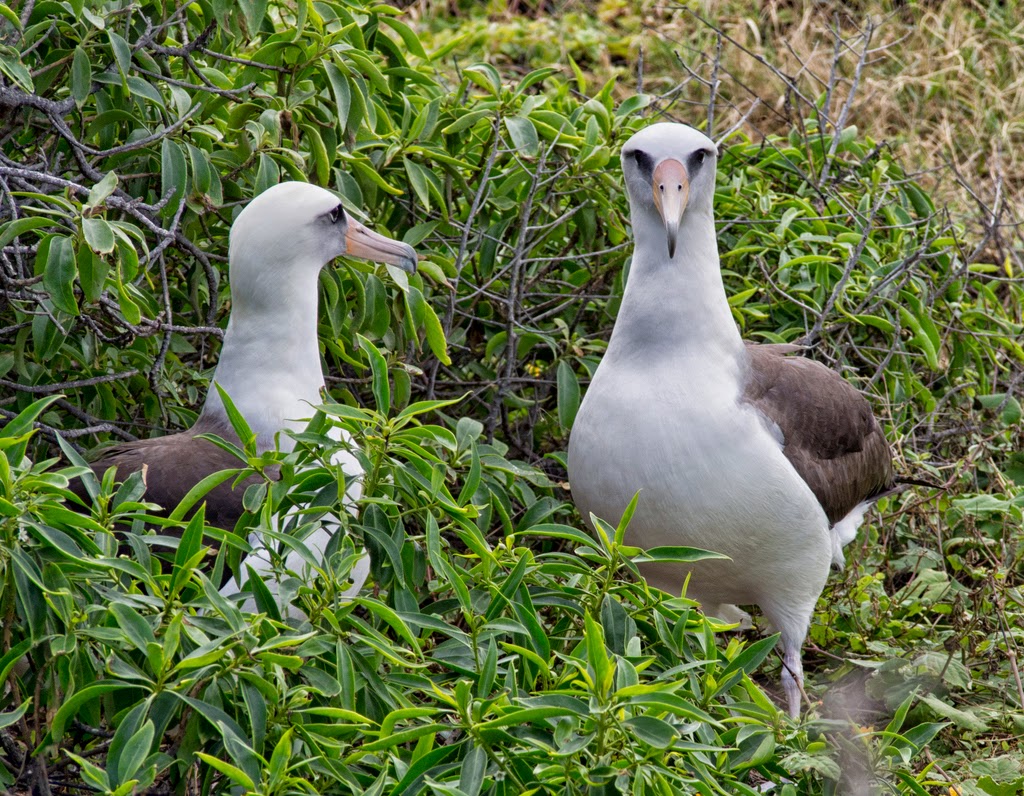
Albatross pair at Ka’ena Point, O’ahu. Photo by Kelvin Lu.
Seabirds, including wedge-tailed shearwaters, noddies, and Laysan Albatrosses nest in selected coastal locations on the main Hawaiian Islands, and in much greater numbers on a myriad of offshore islets, most serving as wildlife sanctuaries. Other species, such as white and red-tailed tropicbirds, and great frigatebirds can be seen soaring overhead along coastlines and cliffs.
Ground-nesting seabirds are especially vulnerable to human disturbance. When visiting nesting areas, please observe all signs and barriers, and stay on established trails. Nests are often nearly invisible to hikers.
Forest Birds
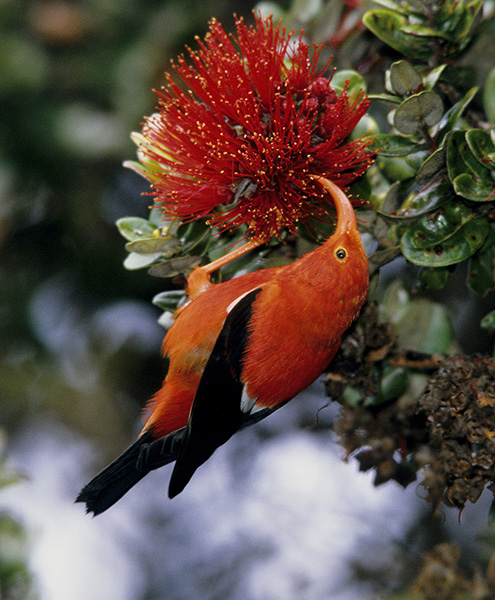
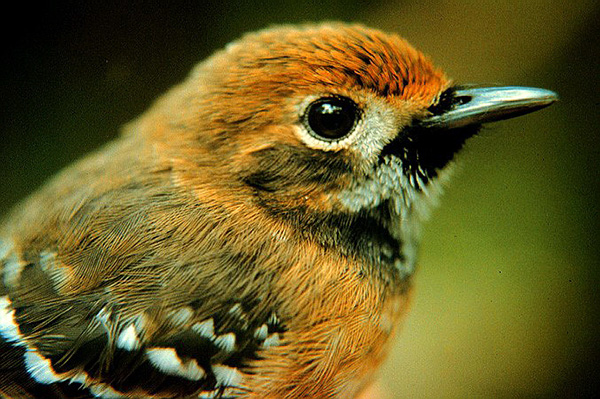
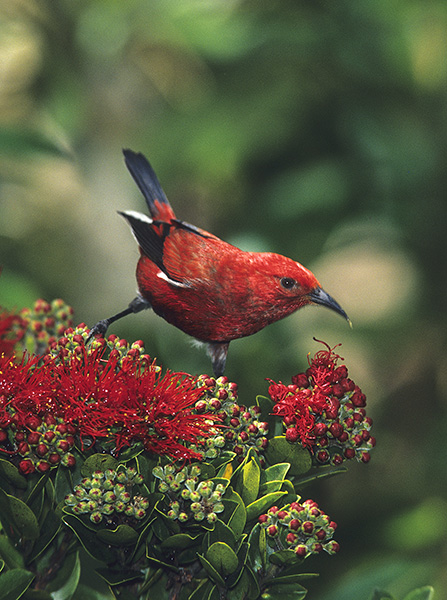
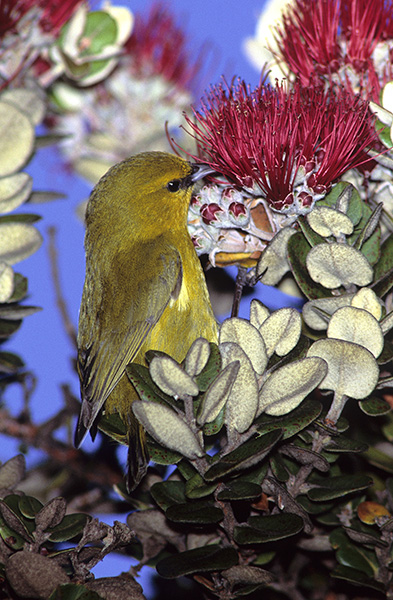
Hawaiʻi’s endemic forest birds are typically limited to higher elevations where more undisturbed stands of native forest remains. Commonly viewed species include the crimson and black-colored, salmon-billed i‘iwi, the similar colored, black-billed ‘apapane, the yellow-green ‘amakihi, and the brown and white ‘elepaio.
To increase your chances of seeing these rare birds, bring along a pair of binoculars. Look for flowering native plants and trees which provide food to native honeycreepers. Stop, sit quietly, and listen for calls. Find a high vantage point and look for movement in the treetops.

Nēnē
Hawaiʻiʻs State bird, the nēnē, or Hawaiian goose, nearly went extinct in the mid 20th century. Down to just 30 living birds around 1950, a program to help the species recover has been very successful. In addition to wild populations on the Big Island, reintroduced populations now inhabit Maui and Kaua’i.
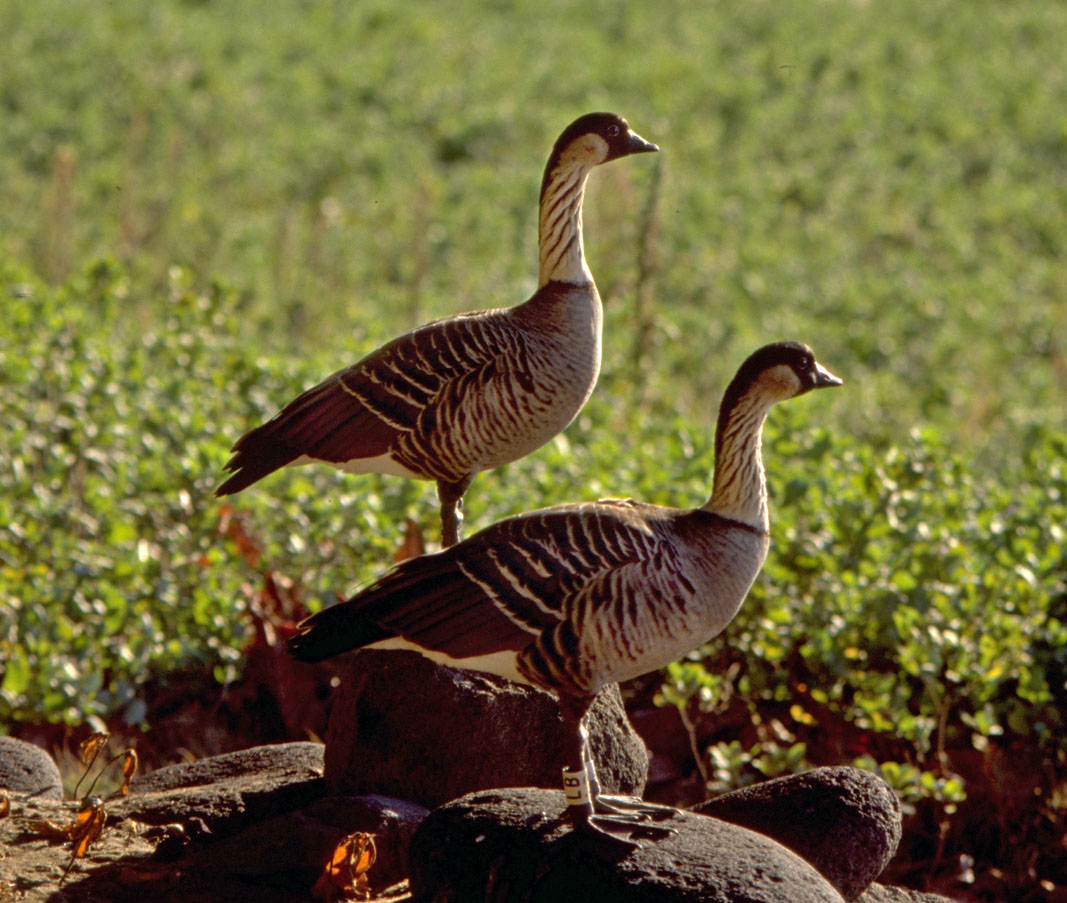
Nēnē, Hawaii’s State Bird. Photo by Tim DelaVega.
In addition to the above, many migratory and resident shorebirds and marsh birds are found in Hawaiʻi, as well as numerous historically introduced species, from cardinals to cockatoos. These introduced birds dominate in urban and lowland settings. To see the true natives, visitors must seek protected and preserved areas like our state parks. And forest reserves.