FAQs
FAQs
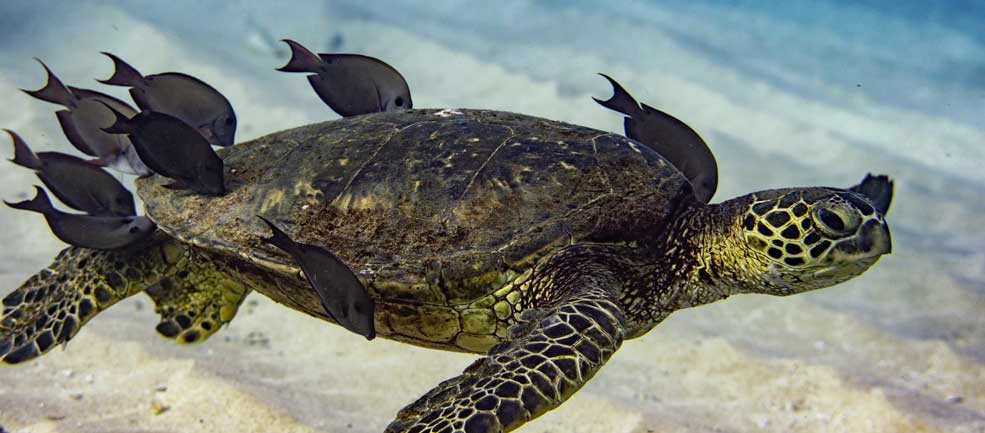
photo: Bert Weeks III
You have questions… we have answers!
Click on a question below to view the answer:
What is the Holomua Marine Initiative?
The Holomua Marine Initiative is a call to action for communities to come together to design an island-based management strategy in partnership with the Division of Aquatic Resources (DAR) to ensure healthy reefs and abundant resources for future generations. Click HERE to read DAR’s guide on the new approach to Holomua Marine Initiative.
What is the goal of the Holomua Marine Initiative?
The Holomua Marine Initiative works to ensure healthy nearshore ecosystems with abundant resources, so that the people of Hawai‘i can enjoy our coastal waters, support livelihoods, and feed our families. The goal of the Holomua Marine Initiative is to effectively manage Hawai‘i’s nearshore marine resources through holistic management strategies and partnerships centered around community priorities, cultural practices, and local knowledge.
What happened to “30×30?”
Holomua is dropping the 30×30 slogan and 30% target for the Holomua Marine Initiative. Frustrations and concerns with the 30×30 target overshadowed other important aspects of the Holomua Marine Initiative. While creating no-take areas to reach the 30% goal of marine management areas (MMA) around each island’s nearshore waters by 2030 was NEVER the intention behind this initiative, the misinformation that was circulating prevented meaningful conversations about the need for effective management to achieve our shared vision of the future of our marine resources. The Holomua Marine Initiative WILL continue, and while creating a network of MMAs encompassing 30% of each island’s nearshore waters is not a goal of this initiative anymore, it is still an option if creating a marine management area is of interest to communities in their place. There is also a full suite of additional management tools that are available to support and continue the Holomua Marine Initiative, such as increasing education and outreach, strengthening monitoring efforts, establishment of bag or size limits, and more. Click HERE to read more and find out what will happen next with the initiative.
How did the Holomua Marine Initiative effort start?
In 2016, the State of Hawai‘i launched the Sustainable Hawai‘i Initiative to protect our natural resources, promote sustainability, and increase Hawai‘i’s self-sufficiency.
Who is leading the Holomua Marine Initiative?
Holomua is a community-driven effort coordinated by the Hawai‘i Department of Land and Natural Resources’ (DLNR) Division of Aquatic Resources. As a member of the community and as part of specific ocean user groups, YOU guide the design of your island’s marine management strategies, as well as the future health and use of Hawai‘i’s nearshore waters and its resources.
How is the Holomua Marine Initiative being funded?
The Holomua Marine Initiative is supported by state, federal, and philanthropic funds. You can find the ’20-’25 fiscal year budget HERE.
What is a Marine Management Area?
A marine management area, or MMA, is a place in the ocean that is managed in a way to protect the ecologically or culturally important marine resources within its boundaries. Click here to learn more about MMAs and the types of MMAs that are in Hawai‘i.
Why do we need to manage our nearshore waters?
We need to manage our nearshore waters to restore and sustain Hawaiʻi’s marine ecosystems and bio-cultural resources. Our marine habitats are under pressure from a growing population, development, unsustainable harvest, climate change and more. The loss of traditional practices magnifies the decline. A recent scientific analysis revealed population declines of some of our favorite reef fish by as much as 75%, and the mass bleaching event in 2015 resulted in up to 50% coral mortality on some reefs. Click here to learn more about why we need to all work together to manage our nearshore resources and habitats.
What is place-based planning?
Place-based planning is a way of managing specific geographic areas by collaborating with communities of that place to understand the unique and diverse values, uses and experiences tied to the area. Through the Holomua Marine Initiative, DAR will engage with local communities on each island, along with scientific and cultural experts in an inclusive, transparent way that will help the people of Hawai‘i achieve effective management of our nearshore waters for healthy reefs, fish, and communities. DAR will collaborate with communities to evaluate existing marine management areas (MMAs), as well as plan and design other marine management strategies to ensure healthy reefs and abundant resources for future generations.
How will the Holomua Marine Initiative incorporate social and cultural values or factors?
The Holomua Marine Initiatives’ community-centered effort will be guided by nine socio-cultural principles throughout the process to minimize potential negative impacts of marine management actions on local and indigenous communities. Socio-cultural principles will be used to evaluate existing MMAs as well as identify potential areas for management based on social and cultural factors. The socio-cultural principles developed fall under four categories that include: Place-based Knowledge and Education; Physical, Mental, and Spiritual Wellbeing; Community Relationships, Engagement, and Commitment; and Efficacy and Equitable Governance. Read more about the socio-cultural design principles here.
Are there local examples in Hawai‘i of successful marine management areas?
Yes, we are fortunate to have several local examples that show marine management areas work when effectively designed and managed. Kahekili Herbivore Fisheries Management Area (KHFMA) on Maui is one example where the take of herbivore fish is prohibited but other fishing is allowed, and fisheries are now thriving through effective management. Within nine years of its implementation in 2009, the number of herbivores had dramatically increased, such as surgeonfishes ( up 71%) and parrotfishes ( up 331%). Click here to read more examples of successful marine management areas here in Hawai‘i.
What kind of data are being used to support this initiative?
To begin working towards place-based management, DAR gathered existing statewide data on biological resources, such as nearshore habitats and fisheries, the threats to them, and important human uses such as fishing and recreation. In addition to DAR monitoring data, recent surveys confirm that members of our community have also observed declines over the past several decades in many nearshore places, and perceive these changes will get worse if we don’t take action soon. “Effective management” is not possible based on scientific data alone. We need information from people on each island to identify locally-important resources and provide ideas about what kind of management strategies would work well for each area.
How will DAR evaluate the success of the Holomua Marine Initiative?
The success of the Holomua Marine Initiative will be measured at several levels: community engagement, effectiveness of management actions, overall ecosystem condition, and socio-cultural factors. For more information on the specific metrics that will be tracked, please check out the Measuring Success section of the Holomua Guide.
How will DAR evaluate the island management proposals developed through this process?
With each of the management proposals, there will be a management plan with specific metrics for monitoring and adaptive evaluation. Management actions proposed through this process will be monitored for ecological indicators (e.g. fish biomass, fish size, percent coral cover, etc.) and socio-cultural indicators (e.g. users’ overall quality of experience in area, factors that affect mental, physical, and spiritual wellbeing, etc.).
Who decides which management recommendations are implemented in the island proposals?
DAR will seek input through a transparent and inclusive public community engagement process to co-create a cohesive management plan for communities and regions on each island that are willing and interested in collaborating with DAR. There will multiple opportunities to participate, and the community for each island will provide input on which management recommendations are implemented. Broader community feedback will be compiled at the beginning of the process at Talk Story sessions. A community-nominated Navigation Team will then be tasked with compiling the community feedback, latest scientific research on the status of the resources, and local expert knowledge of nearshore waters based on individual experiences to develop management recommendations. These recommendations will then be presented to the residents for feedback and revision at Information Exchanges, followed by statewide meetings for further consideration before any management actions are implemented.
Why is Holomua starting on Hawai‘i Island before the Maui process is completed?
Holomua is launching its community engagement on Hawai‘i Island in May 2026. Having completed phase three of the five-phase process on Maui, the team is ready to adapt strategies and apply lessons learned to this next launch on Hawai‘i Island. Holomua remains committed to moving at the community’s pace on Maui while dedicating fresh capacity and expertise to Hawai‘i Island’s unique priorities.
Why did Holomua decide to launch on Hawai‘i Island next after Maui?
We chose Hawai‘i Island as our next location because of its significant community momentum and the high number of local initiatives already well into their planning phases, as well as the existing DAR Hawai‘i Island team capacity. By launching here now, we can effectively align these existing priorities into cohesive management recommendations at both the regional and island scale. As we learn and adapt from the Hawai‘i Island and Maui launches, we anticipate faster rollouts across the remaining islands.
How does DAR envision existing or new community place-based management efforts fitting into the Holomua process?
DAR aims to balance its support for local initiatives with the need to align shared priorities. The goal will be to convene local community groups and the Navigation Team(s) to determine management priorities that have regional alignment and establish cohesive recommendations across. DAR will continue to support specific, place-based efforts motivated by local priorities. This approach is intended to streamline community proposals, increase support during rulemaking, and promote consistent regional standards rather than a complex patchwork of rules for each location.
How are Navigation Teams selected?
Navigation Team members are nominated by each island’s community, with final qualifications and team composition shaped by feedback from the initial Talk Story sessions. Nominees must submit a letter of interest and commitment, which is then reviewed against community-defined criteria. Finally, a Nomination Review Team—usually representing each moku—will select candidates based on eligibility, expertise, and balanced team dynamics.
Who creates the Nomination Review Team?
Ultimately, DAR selects members for this group, usually one per moku based on the following qualifications:
- Be long-time residents of the island that are well-respected and knowledgeable about their communities and people
- Must understand the island’s nearshore resources and be familiar with past and current management efforts and rule-making processes
- Support a fair selection process by minimizing potential bias and dedicated to helping to create a team that represents all relevant interest groups
- Be comfortable being public-facing and featured on DAR/Holomua website and social media
What type of management actions can be included in the Navigation Team proposal?
The role of the Navigation Team is to develop management recommendations for their island’s nearshore resources. These recommendations can include both non-regulatory actions (e.g. restoration projects such as coral outplanting, projects to improve water quality, education and outreach, strengthening monitoring efforts, etc.) and regulatory actions (e.g. fishing rules). Click HERE to view examples of non-regulatory and regulatory management actions.
Who is guiding the Holomua Marine Initiative process?
- Island residents: Provides guidance and identifies priorities throughout the process by attending public meetings such as the initial Talk Story sessions followed by the Information Exchanges, and by engaging with their Navigation Team representative(s). Community members are encouraged to get to know their representative Navigation Team member and provide regular input throughout the process that will be shared and considered in planning discussions.
- Navigation Team members: Drafts management recommendations guided by their communities’ input and priorities while using the best available data, resources, and specialized insights from the Advisory Network as needed.
- Advisory Network: Provides the Navigation Team with specialized ecological, cultural, and socioeconomic expertise. Comprised of subject matter experts, this network offers targeted insights and answers technical questions as they arise throughout the Hawai‘i Island planning process.
Got a question for us that we haven’t answered?
Contact us directly:
email: [email protected]
phone: 808-587-0100
mailing address: 1151 Punchbowl Street, Room 330 Honolulu, Hawai’i 96813
ʻAʻohe hana nui ke alu ʻia.
No task is too big when done together by all.
– Mary Kawena Pukui, ʻŌlelo Noʻeau #142