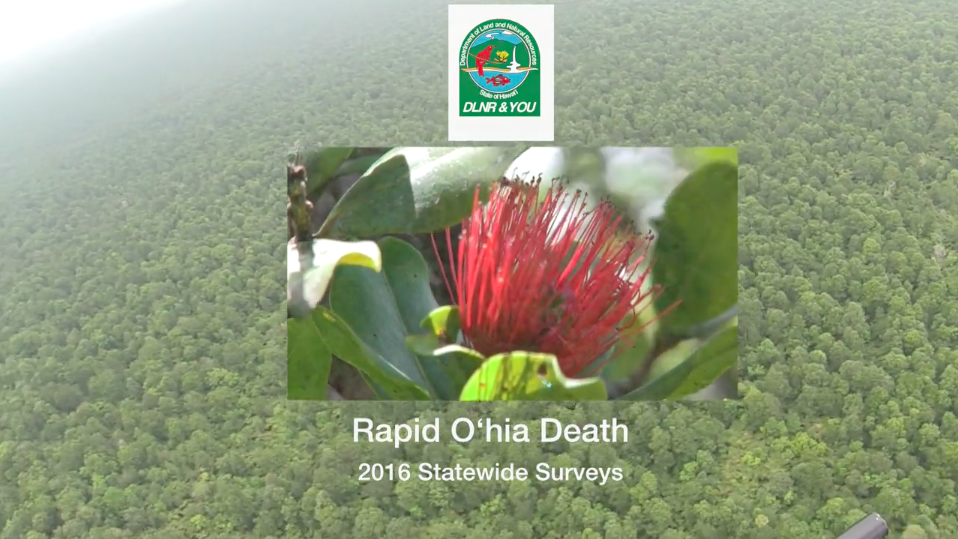
(Honolulu) – A series of aerial surveys of six Hawaiian Islands reveals that the fungal disease, known as Rapid ʻŌhiʻa Death has impacted nearly 50,000 acres of native forest on the Big Island of Hawai‘i. That’s an increase of some 13,000 acres from surveys done earlier in 2016. “It’s important to note that the aerial surveys still need verification by conducting ground-truthing and lab tests,” said Philipp Lahaela Walter, State Resource & Survey Forester for the DLNR Division of Forestry and Wildlife (DOFAW). While some of the increase is due to expanding the survey area, much of it is due to new tree mortality.
slider
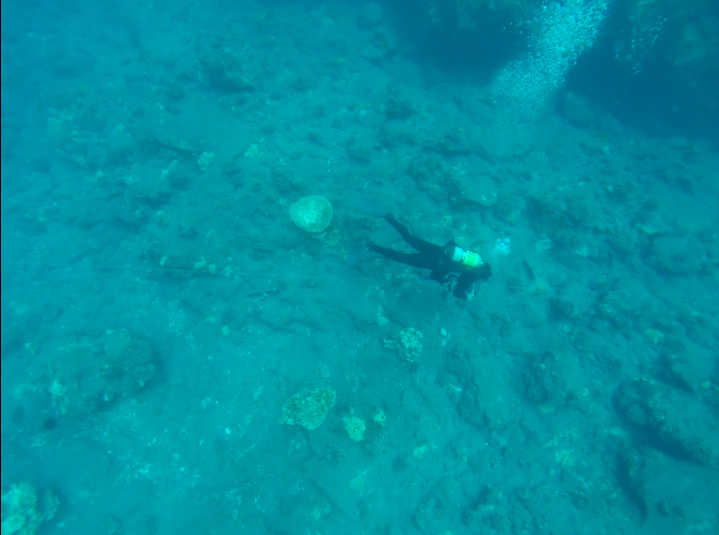
09/08/16 – DLNR & YOU – State Implementing Management Strategies To Promote Coral Bleaching Recovery
(Honolulu) -- Following severe coral bleaching events in 2014 and 2015 within Hawai‘i’s ocean waters, the Department of Land and Natural Resources Division of Aquatic Resources (DAR) has been working to identify management actions that can be taken to promote post-coral bleaching recovery and resiliency in Hawai‘i’s coral reefs.
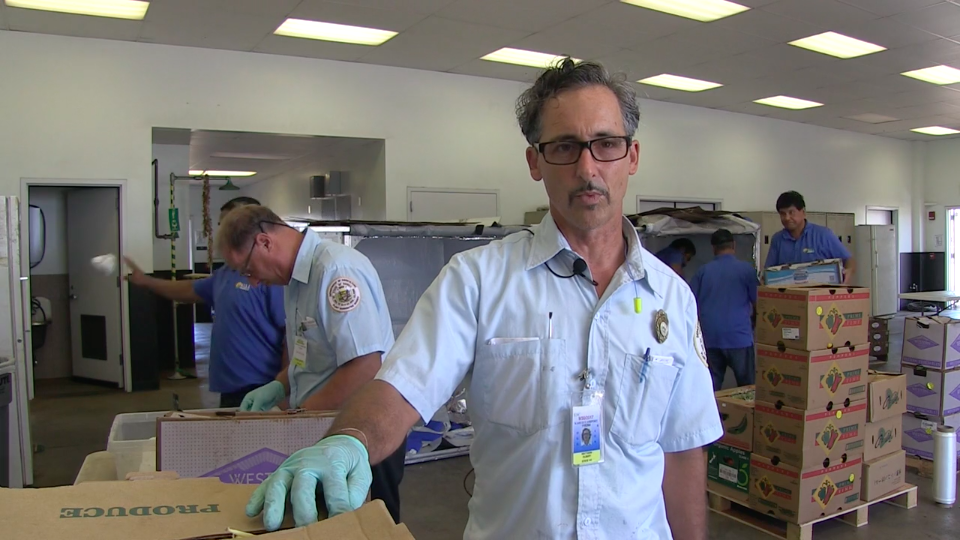
HONOLULU -- Hawai‘i is at an invasive species crossroads: the islands are home to more endangered species than any other state. Between 80-90% of all food is imported, and there are more than 8 million visitors annually, with hundreds of arriving flights and ships carrying cargo.
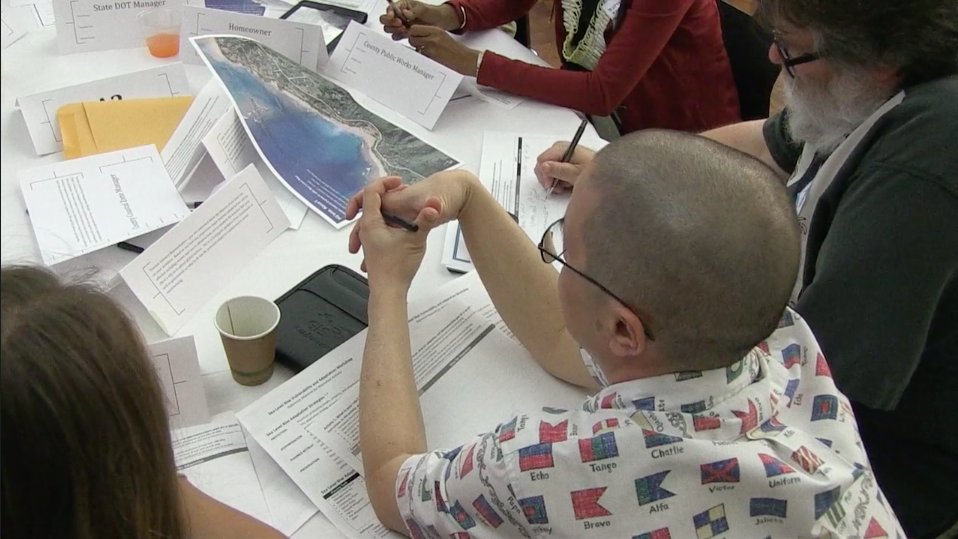
(Honolulu) - Climate change is anticipated to have profound effects in the Hawaiian Islands. Key indicators of the changing climate include rising carbon dioxide in the atmosphere, rising air and sea temperatures, rising sea levels and upper-ocean heat content, changing ocean chemistry and increasing ocean acidity, changing rainfall patterns, decreasing base flow in streams, changing wind and wave patterns, changing extremes, and changing habitats and species distributions.
OCEAN USERS URGED TO USE REEF-SAFE SUNSCREENS Scientific Evidence Showing Chemicals Cause Damage to Coral Reefs
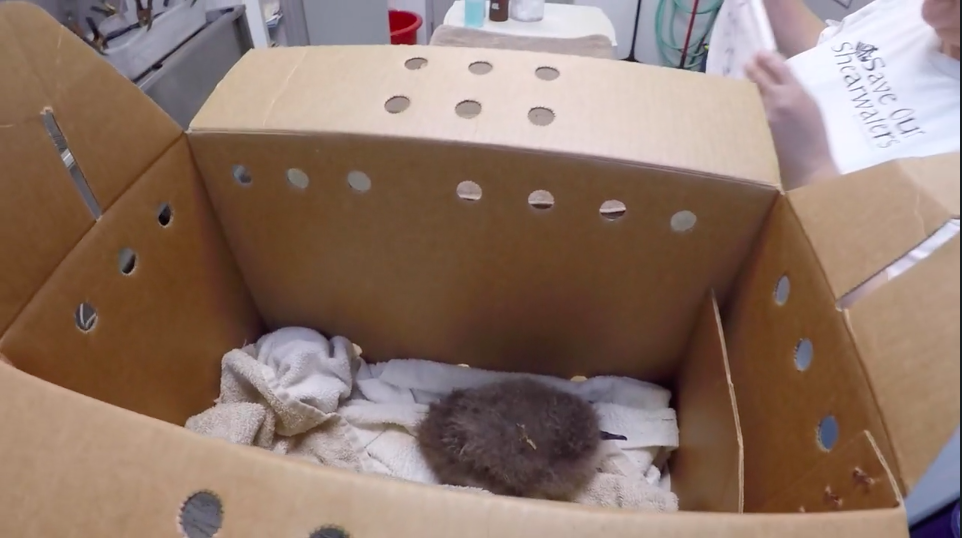
(Lihue, Kaua‘i) - A tiny Newell’s Shearwater chick, rescued from the Hono o Na Pali Natural Area Reserve on Kaua‘i, in late August, is thriving and doing well at the Save our Shearwaters (SOS) facility. The lost chick was collected by KESRP staff members, Heidi Ingram and John Hintze. They carried it up the side of a mountain to a helicopter landing zone on a remote ridge. The bird was put into a carry box and flown to Lihue where it was then taken to SOS at the Kaua‘i Humane Society.
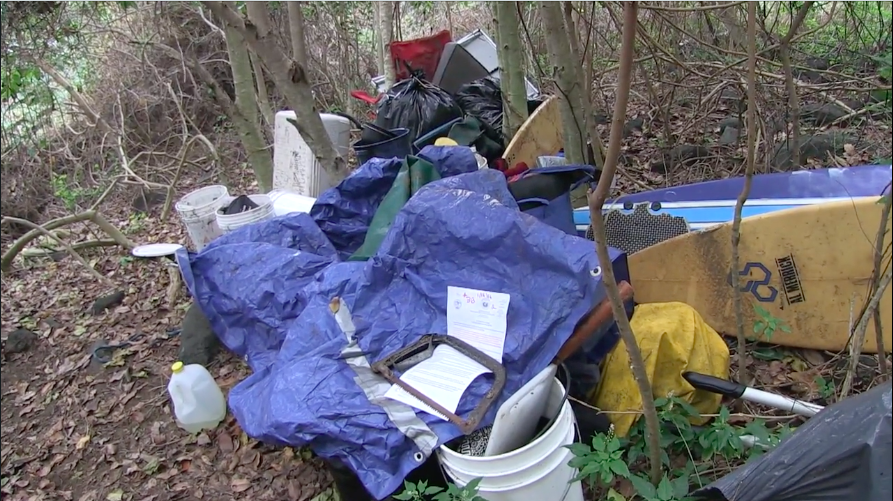
(HONOLULU) – As the Department of Land and Natural Resources (DLNR) was exploring ways to reach more visitors and kama‘āina with information about conserving and protecting natural and cultural resources, the Hawai‘i Tourism Authority (HTA) was engaged in developing a five-year strategic plan. “Coincidentally, the stars were in alignment and what we were thinking turned out to be a perfect fit with the HTA’s strategic plan,” said DLNR Chair Suzanne Case.
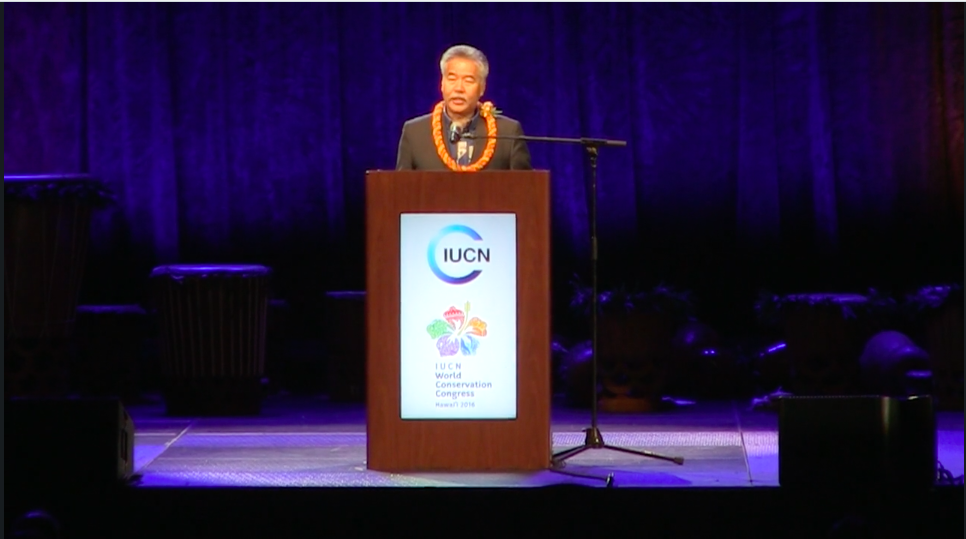
DLNR & YOU – World Conservation Congress Opening Ceremony – Governor David Ige (click on image to watch video)
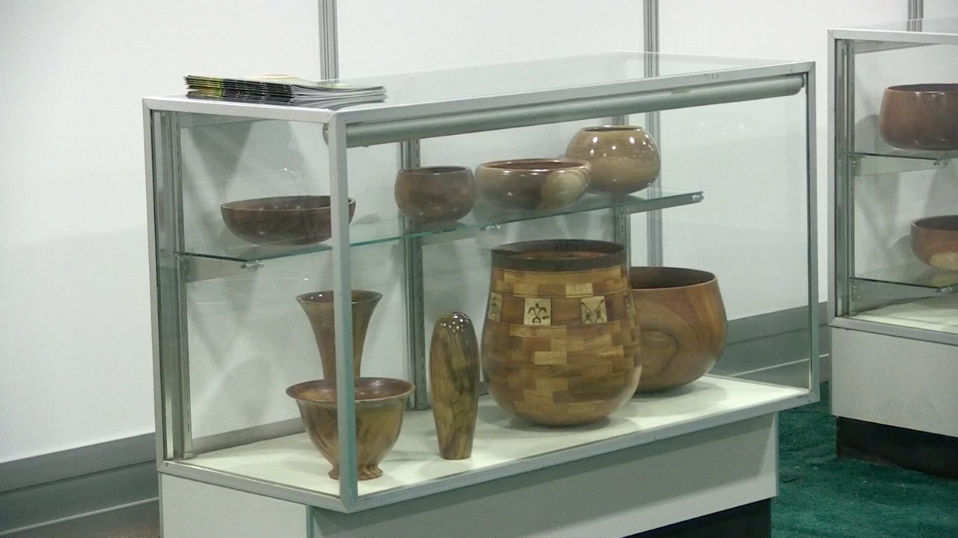
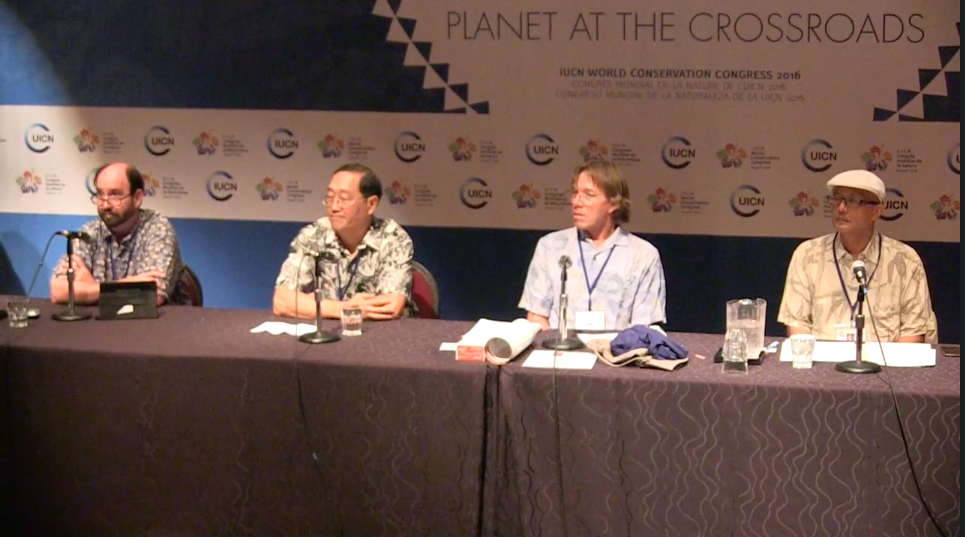
(Honolulu) -- The Department of Land and Natural Resources and the IUCN’s Oceania Regional Office (ORO) are hosting the Hawaii-Pacific Pavilion during the IUCN World Conservation Congress 2016, which will take place at the Hawai‘i Convention Center from September 2-9.
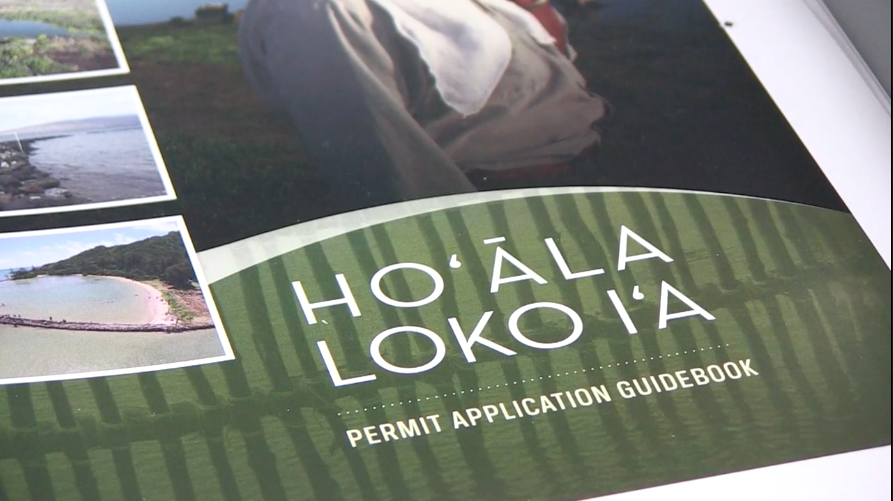
(Honolulu) – Loko i‘a, or traditional Hawaiian fishponds, are unique aquaculture systems that existed throughout ancient Hawai‘i. Although a 1990 statewide survey identified 488 loko i‘a sites, many were in degraded condition, and either completely beyond repair or unrecognizable.