Port of Entry Monitoring Program: Multi-Agency Pest Monitoring at Airports & Harbors
HISC Port of Entry Monitoring Program: Gap filling and multi-agency pest monitoring at Airports and Harbors
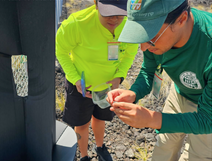
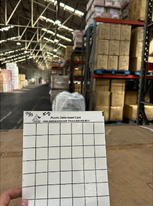
The Port of Entry Monitoring Program (PoEM), formerly known as Māmalu Poepoe, is an interagency initiative designed to enhance the rapid detection of target invasive species. Recently expanded from major airports to include harbors and smaller airport terminals across the Hawaiian Islands, PoEM involves collaboration among state agencies such as the Hawaiʻi Departments of Agriculture and Biosecurity, Health, Transportation, and Land and Natural Resources, alongside the University of Hawaiʻi. The program also partners with island Invasive Species Committees and the Hawaiʻi Ant Lab.
Program Goals
The PoEM Program works to:
- Foster cooperation and communication among agencies monitoring invasive species at ports of entry
- Improve Hawaiʻi’s ability to prevent invasive species introductions through systematic monitoring
- Protect Hawaiʻi’s people, natural resources, food systems, and economy through coordinated surveillance for high-risk pests
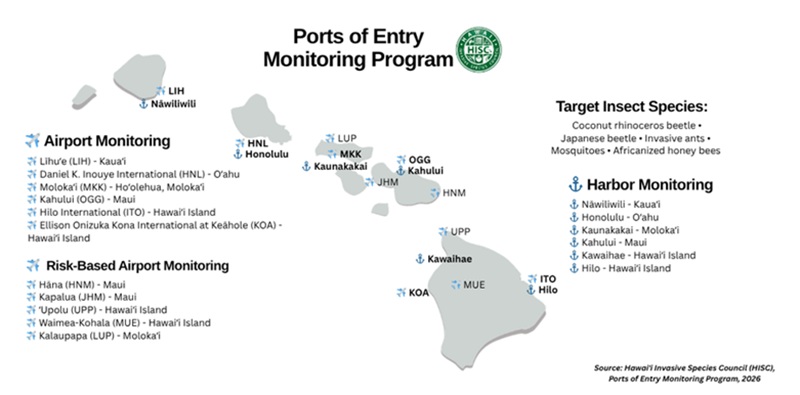 PoEM targets pests including the coconut rhinoceros beetle, Japanese beetle, Africanized honeybees, mosquitoes, and various invasive ant species. There are no native ant or mosquito species in the Hawaiian Islands, underscoring the importance of monitoring high-risk pathways for new incursions. More information can be found in the 2014 – 2022 Māmalu Poepoe Strategic Plan and the “Mamalu Poepoe: Enhancing Hawaii’s Biosecurity Through Interagency Collaboration” article authored by Dr. Leyla Kaufman.
There is currently monitoring at six major airports and six harbors for target species. Monitoring occurs at LIH (Līhuʻe Airport, Kauaʻi), HNL (Daniel K. Inouye International Airport, Honolulu, Oʻahu), ITO (Hilo International Airport, Hawaiʻi Island), KOA (Ellison Onizuka Kona International Airport at Keāhole, Hawaiʻi Island), OGG (Kahului Airport, Maui), and MKK (Molokaʻi Airport in Hoʻolehua, Molokaʻi).
Regular harbor monitoring occurs at Nāwiliwili Harbor (Kauaʻi), Kaunakakai Harbor (Molokaʻi), Kahului Harbor (Maui), Kawaihae Harbor (Hawaiʻi Island), Hilo Harbor (Hawaiʻi Island), and Honolulu Harbor (Oʻahu).
Some monitoring has also been conducted at smaller airports to evaluate risk, including the Mokulele terminals in Hāna and Kapalua on Maui, ʻUpolu and Waimea-Kohala on Hawaiʻi Island, and Kalaupapa on Molokaʻi.
Ports of Entry Monitoring (PoEM) Strategic Plan for 2026–2030
Phase II strategic planning took place in 2025 through individual interviews conducted by a consulting group, as well as in-person and hybrid meetings designed to survey partners involved in the PoEM program. Partners were organized into advisory, technical, and executive roles within the program to help determine the appropriate level of engagement for each participant. A total of 46 stakeholders were invited and participated in the strategic planning process in some capacity. A full-day strategic planning session, along with additional hybrid Teams meetings, engaged many of these stakeholders in a variety of discussions.
The program current priorities and future direction are described in the Ports of Entry Monitoring (PoEM) Strategic Plan 2026–2030 and the accompanying Executive Summary.
Contact: Mason Russo (808-436-4688) program coordinator for the Ports of Entry and Monitoring program.