Kapāpala Koa Canoe Management Area
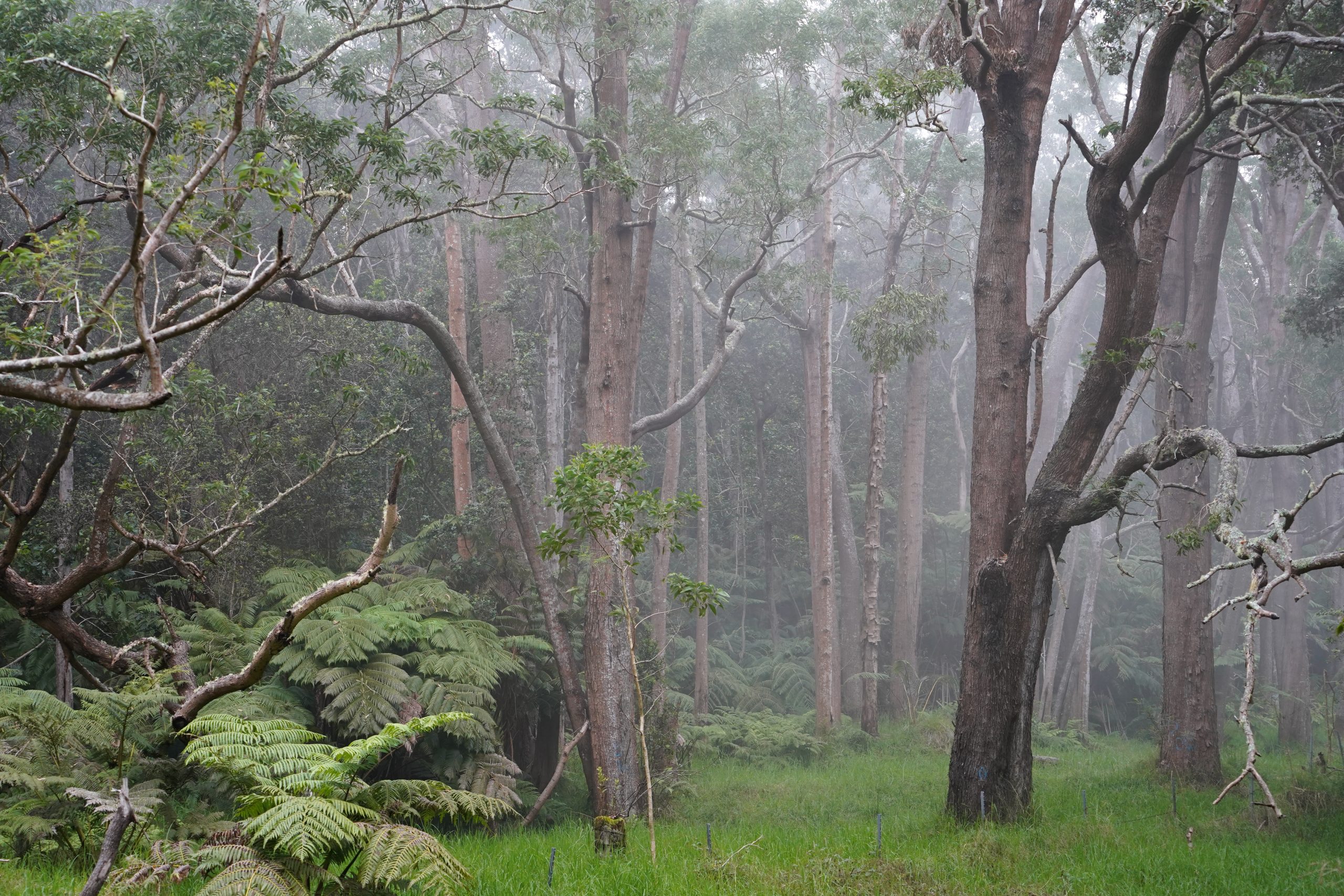
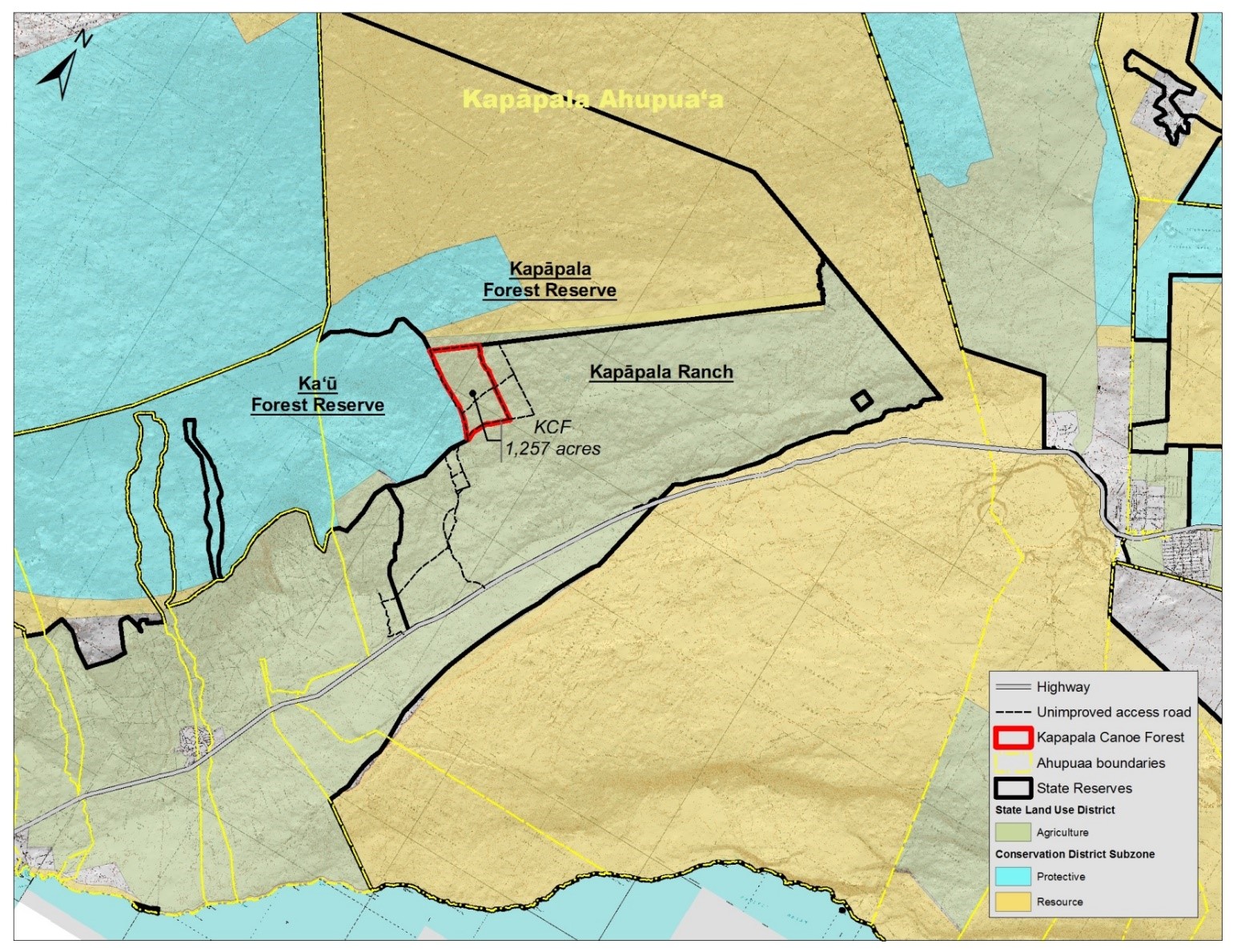
The Kapāpala Koa Canoe Management Area (KKCMA) is a 1,257 acre koa forest located in Kaʻū Forest Reserve on the southeastern slopes of Mauna Loa on the island of Hawaiʻi. The area is covered almost entirely by a native montane koa (Acacia koa) and ʻōhiʻa (Metrosideros polymorpha) forest at about 3,000-5,000ft in elevation.
The primary management objective for the area is to provide a sustainable, long-term supply of koa for the traditional and cultural use of constructing koa canoes, while sustaining the natural and cultural resources in the area. This parcel is currently the only state land in Hawaiʻi with a specific purpose of producing koa canoes. Other management objectives for the area include native forest protection, protection of watershed resources, protection of forest bird habitat, increased regeneration and restoration of koa trees and forest habitat, collaboration with educational groups and community groups, access for recreational activities, and integration of traditional Hawaiian stewardship models with western conservation practices.
HISTORY
Kaʻū is part of the six moku of Hawaiʻi that were delineated by Hawaiians over a thousand years ago. An account from Chester Lyman in 1846, when describing the ahupuaʻa of Kapāpala, notes that he encountered some dwellings and canoe-making sheds, and was impressed by the green hills and moist soil (Lyman 1846, p.9-10). Lyman’s documentation of “canoe making sheds” is one account of Hawaiians using trees from the Kapāpala area for the construction of waʻa, or canoes.
Starting in the late 1980s, DLNR began searching for native forests on state land for the purpose of designating areas for koa management, in efforts to expand silviculture operations in the state. The ample koa resources in the Kaʻū Forest Reserve made Kapāpala Koa Canoe Management Area (KKCMA) an ideal location, and on October 27, 1989, the Board of Land and Natural Resources approved the set-aside of approximately 1,257 acres “for commercial koa timber production, with consideration for recreation, forest bird habitat, and watershed values.”
In the 1990s, following struggles by organizations to find koa trees suitable for the construction of voyaging canoes, the purpose of the area was further refined to focus on the management and cultivation of koa canoe logs. In 2004, the 1,257-acre koa management area was redesignated as the Kapāpala Koa Canoe Management Area, and on June 27, 2005 Executive Order 4109 was issued, officially setting the area aside for the growth and production of koa trees for use in the making of traditional Hawaiian canoes.
The area is a part of the Kaʻū State Forest Reserve. Today, the KKCMA stewardship is informed by an active volunteer working group comprised of multiple partners and the local community. The working group seeks to inform land management with ancient Hawaiian practices and sustainably manage one of the best remaining koa forests in Hawaiʻi.
Kapāpala Koa Canoe Management Area Partners & Working Group
“This project illustrates the collaboration of the State of Hawai‘i and local cultural practitioners, canoe clubs and civic organizations to help bring back one of our most sacred traditions.” says Hovey Lambert, a traditional canoe carver and Kapāpala working group member.
The KKCMA is managed by the Forestry Program at the DLNR Division of Forestry and Wildlife and is informed by a number of interested partners including the Three Mountain Alliance (a watershed partnership), and the KKCMA working group. The working group is comprised of key stakeholders including canoe clubs, Kaʻū kūpuna, cultural practitioners, canoe builders, conservationists, and adjacent landowners; all convened in the Kapāpala working group to provide direction and guide decisions on the management of KKCMA and the sustainable use of its natural and cultural resources. Since 2015, the volunteer working group has been advising the Forestry Program on the management plan and application in which logs can be provided to groups. If you are interested in receiving updates about Kapāpala Koa Canoe Management Area or participating on the working group, please inquire here.
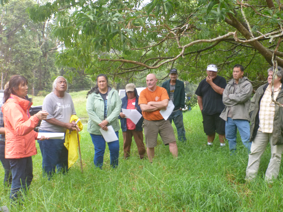 Working Group members at Kapāpala Koa Canoe Management Area Working Group members at Kapāpala Koa Canoe Management Area |
“Within the sacred koa trees of our Kapāpala Forest lives the breath of our kūpuna and the songs of our endemic Hawaiian birds. When we walk the path of our ancestors with respect and proper protocol, we are not merely just harvesting and carving a tree, we are continuing the flow of knowledge passed down through generations. This process strengthens our community, our cultural identity and while honoring the traditions entrusted to us through navigating this path, we serve as the bridge that carries ancestral wisdom into the future for those yet to come.” Nohea Kaʻawa, a member of the Kapāpala working group and Kaʻū resident. |
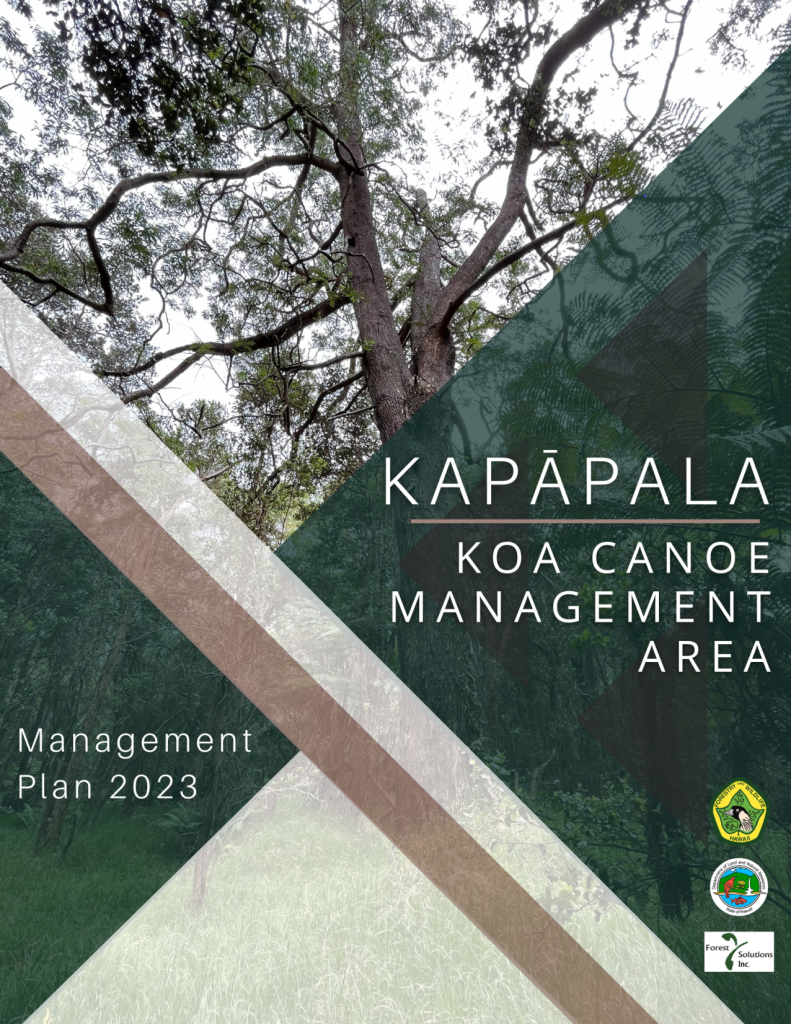
Kapāpala Koa Canoe Management Plan 2023
The Forestry Program at the DLNR Division of Forestry and Wildlife completed a forest management plan for the Kapāpala Koa Canoe Management Area, and it was approved the Board of the Department of Natural Resource in May 2023. The management plan contains a brief history, a description of natural and cultural resources and threats to the area, as well as an account of intended uses and planned management actions. The major focus of this plan is to implement a sustainable, long-term to supply koa for the purposes of carving traditional koa canoes, while also protecting any natural and cultural resources, such as watershed values, native ecosystems, and threatened and endangered species. This and other management goals are described in the full plan. Click on the thumbnail to read the plan in its entirety.
Kapāpala Koa Canoe Management Area Koa Log Applications & Instructions
LINKS |
| Management Plan |
| Log Allocation Application |
| Scoring Rubric |
| FAQs |
| Application Flier |
| RESOURCES |
| Examples of canoe shapes |
| Na Pule Kahiko: Ancient Hawaiian Prayers |
Submission Deadline: May 30, 2026
2026 APPLICATION
The Koa Log Application was developed over several years in partnership with a diverse representation of stakeholders, including kūpuna and residents of Kaʻū, canoe clubs and associations, cultural practitioners, canoe builders, conservationists, and adjacent landowners. The protocol is for applicants who wish to acquire a koa log to build canoes to be used for racing, voyaging, fishing, education, or other traditional and customary practices.
This first year of the application and allocation protocol is a pilot project that will be used to further refine and improve the process and operations. Therefore, DOFAW asks for applicants’ patience with the process and staff. DOFAW may need to limit the number of successful applicants in the first year to a number that DOFAW can successfully manage the process.
Organizations interested in receiving koa resources from Kapāpala Koa Canoe Management Area (KKCMA) are encouraged to read the scoring rubric and FAQs before filling out the application. All relevant materials are posted in the Links & Resources table of this website.
HOW TO APPLY: PLEASE review the scoring rubric before starting an application
Applications will be due on MAY 30, 2026, at midnight.
Please submit completed applications BY EMAIL to [email protected]. PLEASE WRITE IN THE SUBJECT LINE: Applicant Name and “KAPĀPALA APPLICATION”.
All applicants will receive an email confirming receipt of the application.
All items must be completed for the application to be reviewed and scored by a selection committee and subject to a standardized scoring system. All applications submitted within the same application period will be evaluated against each other. Applications with the highest scores will have the highest priority. However, DOFAW will have the ultimate decision regarding the allocation of canoe logs.
HOW WILL I KNOW IF I AM A SUCESSFUL APPLICANT?
The Forestry Program will notify all applicants by email 3-4 months after the application deadline.
IF I AM NOT SELECTED, CAN I REAPPLY?
Yes! There will be rounds of applications in the near future. As noted above, the first year is a pilot project to refine the procedures and allocation process. If applicants are not successful in year 1, applicants will have an opportunity in subsequent years to resubmit an application.
If you have questions, please email [email protected] and write in the subject: KAPĀPALA INQUIRY. Please note, our staff is small and may need some time to review and respond to your questions and/or send confirmation emails. Thank you for your interest, patience, and support for the KKCMA.
PLEASE CHECK BACK WEEKLY FOR DETAILS OF AN UPCOMING WEBINAR COVERING THE APPLICATION & FAQs
You may also sign up for updates here. In the meantime, please read all the materials under the Links & Resources table and direct questions to the email provided above. That will help us to maximize the public benefit of the webinar if we know where people are having issues, novel questions, and/or the general mindset of applicants.